
花崗岩是一種火成岩,因其極高的強度、密度、耐久性和抗腐蝕性而被廣泛開採。但花崗岩的用途也非常廣泛——它並非只能用於製作方形和矩形!事實上,我們經常使用各種形狀、角度和曲線的花崗岩構件,並且取得了卓越的成果。
Through our state of the art processing, cut surfaces can be exceptionally flat. These qualities make granite the ideal material to create custom-size and custom-design machine bases and metrology components. Granite is:
■ 可加工
■ 切割和加工後非常平整
■ 防鏽
■ 耐用
■持久耐用
花崗岩構件也易於清潔。在設計客製化方案時,請務必選擇花崗岩,因為它具有許多優越優勢。
標準/高磨損應用
ZHHIMG標準平板產品所使用的花崗岩英含量高,因此具有更強的耐磨性和抗損性。我們的高級黑色花崗岩吸水率低,可最大限度地降低精密量具放置於平板上時生鏽的可能性。 ZHHIMG提供的花崗岩顏色可減少眩光,進而減輕使用者的眼部疲勞。我們在選擇花崗岩類型時充分考慮了熱膨脹係數,力求將熱膨脹的影響降至最低。
CUSTOM APPLICATIONS
當您的應用需要帶有特殊形狀、螺紋嵌件、槽或其他加工結構的板材時,您可以選擇像濟南黑鐵這樣的材料。這種天然材料具有優異的剛性、優異的減振性能和更佳的加工性能。
需要注意的是,顏色本身並不能反映石材的物理特性。一般來說,花崗岩的顏色與其所含礦物質的數量直接相關,而礦物質的多寡可能與它作為精密加工板材的特性無關。有些粉紅色、灰色和黑色花崗岩非常適合用作精密加工板材,而有些黑色、灰色和粉紅色花崗岩則完全不適用於精密加工。花崗岩作為精密加工板材的關鍵特性與顏色無關,具體如下:
■ 剛度(負載下的撓度 - 以彈性模量表示)
■ 硬度
■ 密度
■ 耐磨性
■ 穩定性
■ 孔隙率
我們測試並比較了多種花崗岩材料,最終得出結論:濟南黑花崗岩是我們迄今為止所知的最佳材料。印度黑花崗岩和南非花崗岩與濟南黑花崗岩相似,但它們的物理性能略遜於濟南黑花崗岩。 ZHHIMG將繼續在全球範圍內尋找更多花崗岩材料,並比較它們的物理性能。
如需進一步探討適合您專案的花崗岩,請與我們聯絡。info@zhhimg.com.
不同的製造商採用不同的標準。世界上有很多種標準。
DIN 標準、ASME B89.3.7-2013 或聯邦規範 GGG-P-463c(花崗岩表面板)等作為其規範的基礎。
我們可以根據您的要求生產花崗岩精密檢測板。如果您想了解更多標準訊息,歡迎聯繫我們。
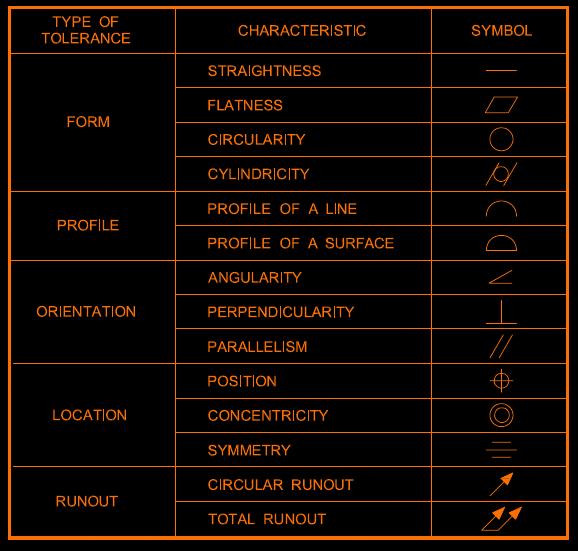
平整度可以理解為表面上所有點都包含在兩個平行平面內,即底面和頂面。這兩個平面之間的距離即為表面的整體平整度。這種平整度測量通常帶有公差,並且可能包含等級標識。
例如,聯邦規範中定義了三種標準等級的平面度公差,其計算公式如下:
■實驗室級 AA = (40 + 對角線平方/25) x .000001" (單邊)
■ 檢驗等級 A = 實驗室等級 AA x 2
■工具室 B 級 = 實驗室 AA 級 x 4。
對於標準尺寸的平板,我們保證其平面度公差超過本規範的要求。除平面度外,ASME B89.3.7-2013 和聯邦規範 GGG-P-463c 還涵蓋以下主題:重複測量精度、平板花崗岩的材料特性、表面光潔度、支撐點位置、剛度、可接受的檢驗方法、螺紋嵌件的安裝等。
ZHHIMG生產的花崗岩平板和花崗岩檢驗板符合或超過本規範中規定的所有要求。目前,尚無針對花崗岩角板、平行板或標準方尺的明確規範。
你可以在以下位置找到其他標準的公式:下載.
首先,保持平板清潔至關重要。空氣中的磨料粉塵通常是平板磨損的主要原因,因為它容易嵌入工件和量規的接觸面上。其次,用東西蓋住平板,防止灰塵和損壞。不使用時蓋住平板、定期旋轉平板以避免單一區域過度磨損,以及將量規上的鋼製接觸墊更換為硬質合金接觸墊,都可以延長平板的使用壽命。此外,避免在平板上放置食物或軟性飲料。請注意,許多軟性飲料含有碳酸或磷酸,這些物質會溶解平板上較軟的礦物質,並在表面上留下細小的凹洞。
這取決於餐盤的使用方式。如果可以,我們建議在一天(或一個工作班次)開始和結束時分別清洗餐盤。如果餐盤沾染了污漬,特別是油性或黏性液體,則應立即清洗。
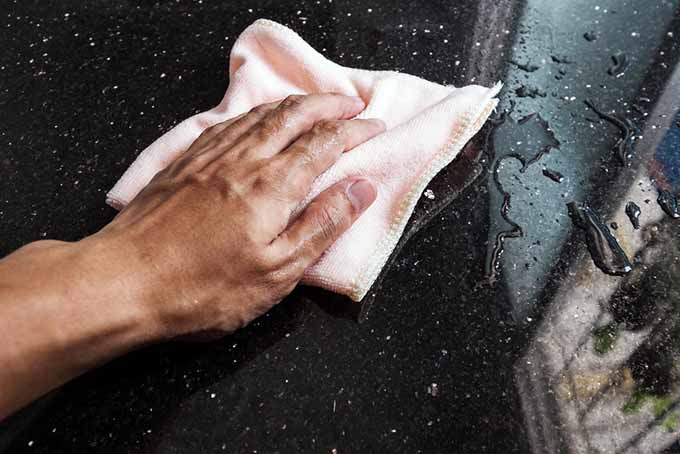
定期使用液體或ZHHIMG免水錶面清潔劑清潔印版。清洗劑的選擇至關重要。如果使用揮發性溶劑(例如丙酮、稀釋劑、酒精等),溶劑揮發會導致印版表面冷卻變形。在這種情況下,必須先讓印版恢復到正常溫度後再使用,否則會導致測量誤差。
盤子達到正常溫度所需的時間取決於盤子的大小和冷卻程度。較小的盤子通常需要一小時,較大的盤子可能需要兩小時。如果使用水性清潔劑,也會伴隨一些蒸發冷卻作用。
盤子還會殘留水分,這可能會導致與盤子表面接觸的金屬部件生鏽。有些清潔劑乾燥後會留下黏性殘留物,這些殘留物會吸附空氣中的灰塵,實際上會加劇磨損,而不是減少磨損。
這取決於平板的使用情況和環境。我們建議新平板或精密花崗岩配件在購買後一年內進行全面重新校準。如果花崗岩平板使用頻繁,建議將此間隔縮短至六個月。每月使用電子水平儀或類似設備檢查重複測量誤差,即可發現任何磨損點,且只需幾分鐘即可完成。首次重新校準結果確定後,可依貴公司內部品質系統的允許或要求延長或縮短校準間隔。
我們可以提供花崗岩檯面檢測和校準服務。

校準結果出現差異可能有以下幾個原因:
- 校準前,表面用熱水或冷水清洗,且未給予足夠的歸一化時間。
- 盤子支撐不當。
- 溫度變化
- 草稿
- 避免陽光直射或其他輻射熱照射到盤子表面。確保頭頂照明不會加熱盤子表面。
- 冬季和夏季垂直溫度梯度的變化(如果可能,請了解校準時的垂直溫度梯度。)
- 裝運後,板材未獲得足夠的歸一化時間。
- 不當使用檢測設備或使用未經校正的設備
- 磨損引起的表面變化
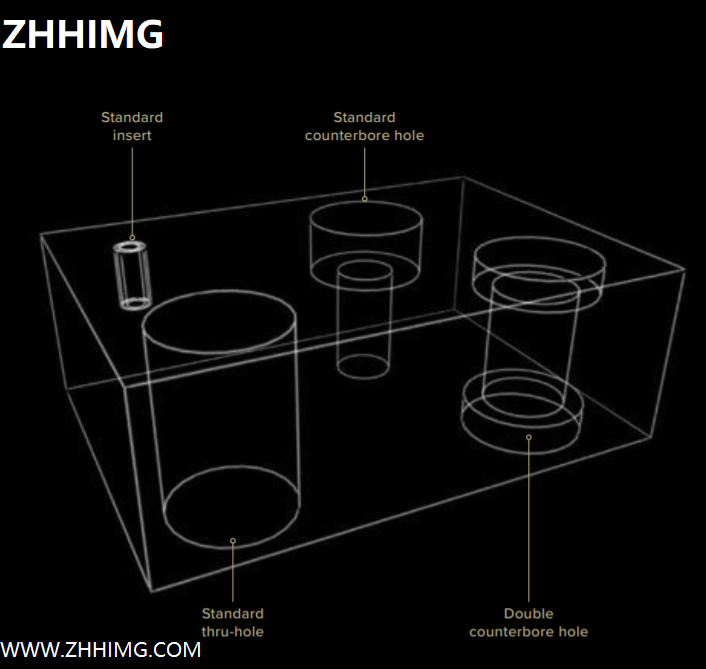
精密花崗岩上有多少種孔?
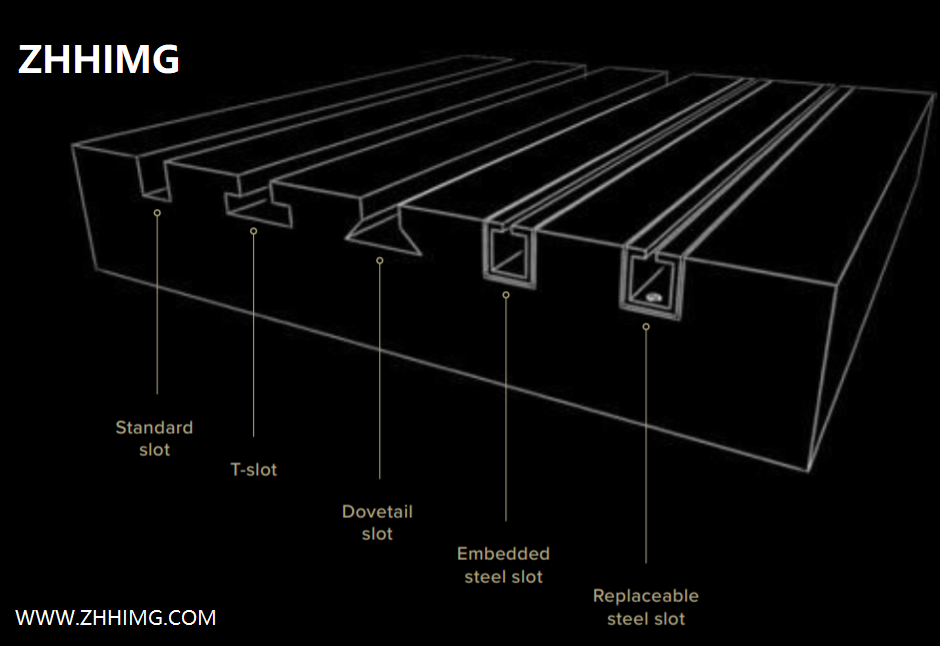
精密花崗岩組件上的槽
對於許多工廠、檢驗室和實驗室而言,精密花崗岩平板是進行精確測量的基礎。由於所有線性測量都依賴精確的參考面來取得最終尺寸,因此平板為加工前的工件檢驗和佈局提供了最佳的參考平面。它們也是進行高度測量和表面測量的理想基底。此外,其高度的平整度、穩定性、整體品質和製程使其成為安裝複雜機械、電子和光學測量系統的理想選擇。對於所有這些測量過程,保持平板的校準至關重要。
Repeat Measurements and Flatness
平面度和重複測量對於確保表面精度至關重要。平面度可以理解為表面上所有點都包含在兩個平行平面(底面和頂面)內。測量這兩個平面之間的距離即可得出表面的整體平面度。平面度測量通常帶有公差,並且可能包含等級標識。
The flatness tolerances for three standard grades are defined in the federal specification as determined by the following formula:
DIN標準、GB標準、ASME標準、JJS標準…不同國家有不同的標準…
In addition to flatness, repeatability must be ensured. A repeat measurement is a measurement of local flatness areas. It is a measurement taken anywhere on the surface of a plate that will repeat within the stated tolerance. Controlling local area flatness to a tighter tolerance than overall flatness guarantees a gradual change in surface flatness profile, thereby minimizing local errors.
為確保檯面滿足平整度和重複測量精度要求,花崗岩檯面製造商應以聯邦規範 GGG-P-463c 為基礎制定其規格。此標準涵蓋重複測量精度、花崗岩檯面材料特性、表面光潔度、支撐點位置、剛度、可接受的檢驗方法以及螺紋嵌件的安裝。
Checking Plate Accuracy
遵循一些簡單的指導原則,花崗岩平板的使用壽命可以長達數年。平板的精度檢查頻率取決於其使用情況、車間環境和所需精度。一般而言,新平板應在購買後一年內進行全面校準。如果平板使用頻繁,建議將校準週期縮短至六個月。
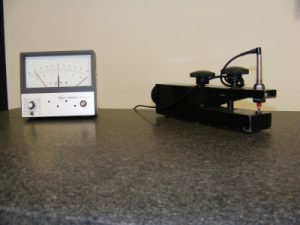
Before a surface plate has worn beyond specification for overall flatness, it will show worn or wavy posts. Monthly inspection for repeat measurement errors using a repeat reading gage will identify wear spots. A repeat reading gage is a high-precision instrument that detects local error and can be displayed on a high magnification electronic amplifier.
An effective inspection program should include regular checks with an autocollimator, providing actual calibration of overall flatness traceable to National Institute of Standards and Technology (NIST). Comprehensive calibration by the manufacturer or an independent company is necessary from time to time.
Variations Between Calibrations
在某些情況下,表面板校準結果會有所差異。有時,表面磨損導致的表面變化、檢測設備使用不當或使用未經校準的設備等因素都可能導致這些差異。然而,最常見的兩個因素是溫度和支撐條件。
One of the most important variables is temperature. For instance, the surface might have been washed with a hot or cold solution prior to calibration and not allowed sufficient time to normalize. Other causes of temperature change include drafts of cold or hot air, direct sunlight, overhead lighting or other sources of radiant heat on the surface of the plate.
There also can be variations in the vertical temperature gradient between winter and summer. In some cases, the plate is not allowed sufficient time to normalize after shipment. It is a good idea to record the vertical gradient temperature at the time the calibration is performed.
Another common cause for calibration variation is a plate that is improperly supported. A surface plate should be supported at three points, ideally located 20% of the length in from the ends of the plate. Two supports should be located 20% of the width in from the long sides, and the remaining support should be centered.
Only three points can rest solidly on anything but a precision surface. Attempting to support the plate at more than three points will cause the plate to receive its support from various combinations of three points, which will not be the same three points on which it was supported during production. This will introduce errors as the plate deflects to conform to the new support arrangement. Consider using steel stands with support beams designed to line up with the proper support points. Stands for this purpose are generally available from the surface plate manufacturer.
If the plate is properly supported, precise leveling is only necessary if an application specifies it. Leveling is not necessary to maintain the accuracy of a properly supported plate.
Extend Plate Life
遵循一些指導原則可以減少花崗岩檯面的磨損,最終延長其使用壽命。
首先,保持量規清潔至關重要。空氣中的磨蝕性粉塵通常是造成量規磨損的最大原因,因為它容易嵌入工件和量規的接觸面上。
It also is important to cover plates to protect it from dust and damage. Wear life can be extended by covering the plate when not in use.
定期旋轉測量盤,避免單一區域過度使用。此外,建議將測量盤上的鋼製接觸墊更換為硬質合金接觸墊。
Avoid setting food or soft drinks on the plate. Many soft drinks contain either carbonic or phosphoric acid, which can dissolve the softer minerals and leave small pits in the surface.
Where to Relap
當花崗岩平板需要重新研磨時,應考慮是在現場還是在校準中心進行。最好是在工廠或專用設施進行研磨。但是,如果平板磨損不太嚴重,通常在所需公差的 0.001 英吋以內,則可以在現場進行研磨。如果平板磨損嚴重,超出公差 0.001 英吋以上,或表面有嚴重的凹坑或缺口,則應先送回工廠進行研磨,然後再進行研磨。
A calibration facility has the equipment and factory setting providing the optimum conditions for proper plate calibration and rework if necessary.
選擇現場校準和表面修復技術人員時務必格外謹慎。務必索取其資格認證,並確認技術人員使用的設備具有可追溯的校正記錄。經驗也是重要因素,因為要掌握如何正確研磨精密花崗岩需要多年的學習。
Critical measurements start with a precision granite surface plate as a baseline. By ensuring a reliable reference by using a properly calibrated surface plate, manufacturers have one of the essential tools for reliable measurements and better quality parts.Q
Checklist for Calibration Variations
1. 在校準之前,用熱溶液或冷溶液清洗表面,並且沒有給予足夠的時間來使其歸一化。
2. 板材支撐不當。
3. 溫度變化。
4. 草稿。
5. 避免陽光直射或其他輻射熱源照射到盤子表面。務必確保上方照明不會加熱盤子表面。
6. 冬季和夏季垂直溫度梯度的變化。如果可能,請了解校準時的垂直溫度梯度。
7. 裝運後,板材未給予足夠的穩定時間。
8. 檢驗設備使用不當或使用未經校正的設備。
9. 磨損引起的表面變化。
Tech Tips
- 由於每項線性測量都依賴一個精確的參考面來獲取最終尺寸,因此平板為加工前的工件檢查和佈局提供了最佳的參考平面。
- Controlling local area flatness to a tighter tolerance than overall flatness guarantees a gradual change in surface flatness profile, thereby minimizing local errors.
- 有效的檢驗程序應包括使用自動準直儀進行定期檢查,提供可追溯至國家檢驗機構的整體平面度實際校準。
花崗岩的礦物顆粒中,90%以上是長石和石英,其中長石含量最高。長石通常呈白色、灰色或肉紅色,石英大多為無色或灰白色,它們共同構成了花崗岩的基本顏色。長石和石英都是硬質礦物,用鋼刀都很難切割。至於花崗岩中的暗斑,主要是黑雲母,但也含有一些其他礦物。黑雲母雖然質地相對較軟,但其抗壓性並不弱,而且在花崗岩中的含量很少,通常低於10%。這正是花崗岩特別堅固的物質狀態。
花崗岩堅固的另一個原因是其礦物顆粒緊密結合、相互嵌合。孔隙率通常不到岩石總體積的1%。這使得花崗岩能夠承受巨大的壓力,並且不易被水分滲透。
花崗岩部件由石材製成,不生鏽,耐酸鹼,耐磨性好,使用壽命長,無特殊維護。花崗岩精密部件主要用於機械行業的刀具製造,因此被稱為花崗岩精密部件或花崗岩部件。花崗岩精密零件的特性與花崗岩平台基本相同。花崗岩精密零件的刀具製造及測量簡介:精密加工和微加工技術是機械製造業的重要發展方向,也是衡量高新技術水準的重要指標。尖端技術和國防工業的發展離不開精密加工和微加工技術。花崗岩部件在測量過程中滑動順暢,不會出現卡頓。工作表面測量時,一般刮痕不會影響測量精度。花崗岩部件需要根據需求方的要求進行設計和生產。
應用領域:
眾所周知,越來越多的機器和設備選擇精密花崗岩零件。
花崗岩部件用於動態運動、直線馬達、三坐標測量機、CNC工具機、雷射加工機…
歡迎聯絡我們以了解更多資訊。
花崗岩測量設備和花崗岩機械零件均採用優質濟南黑花崗岩製造。由於其精度高、使用壽命長、穩定性好、耐腐蝕性強,已被越來越多地應用於現代工業的產品檢測以及機械航空航天、科學研究等領域。
優勢
硬度是鑄鐵的兩倍;
----尺寸的微小變化是由於溫度變化引起的;
----無需擰乾,因此不會中斷工作;
----由於晶粒結構細密、黏性小,無毛邊或凸起,保證了較長使用壽命內的高度平整度,且不會對其他零件或儀器造成損壞;
----與磁性材料配合使用,運轉無故障;
使用壽命長,不生鏽,因此維護成本低。
精密花崗岩表面板經過精密研磨,達到很高的平整度標準,以確保精度,並用作安裝精密機械、電子和光學測量系統的底座。
花崗岩表面板的一些獨特特徵:
硬度均勻性;
負載條件下精度高;
減振劑;
易於清潔;
耐纏繞;
低孔隙率;
不具磨蝕性;
非磁性
花崗岩表面板的優點
First, the rock after a long period of natural aging, uniform structure, coefficient minimum, the internal stress completely disappear, not deformed, so the precision is high.
傳送電子郵件
Skype
英語
德文
法語
葡萄牙語
西班牙語
日本人
韓國人
阿拉伯
愛爾蘭
希臘文
土耳其
義大利語
丹麥語
羅馬尼亞語
印尼
捷克語
瑞典
拋光
巴斯克
加泰隆尼亞語
世界語
印地語
寮國
阿爾巴尼亞語
阿姆哈拉語
亞美尼亞
亞塞拜然
白俄羅斯
P孟加拉
波士尼亞
保加利亞語
宿霧語
齊切瓦語
科西嘉島
克羅埃西亞語
荷蘭語
愛沙尼亞語
菲律賓人
芬蘭
芙烈西亞
加利西亞語
喬治亞
古吉拉特語
海地
豪薩語
夏威夷希伯來文苗族
匈牙利冰島語伊博語
爪哇語卡納達語
哈薩克
高棉語
庫德
吉爾吉斯
拉丁
拉脫維亞語
立陶宛語
盧森堡..
馬其頓
馬爾加什
馬來語
馬拉雅拉姆語
馬爾他語
毛利人
馬拉地語
蒙
緬甸
尼泊爾語
挪威
普什圖語
波斯語
旁遮普語
塞爾維亞
塞索托語
僧伽羅語
斯洛伐克
- 斯洛維尼亞語
- 索馬利亞
- 薩摩亞人
- 蘇格蘭蓋爾語
- 紹納語
- 信德語
- 巽他族
- 斯瓦希里語
- 塔吉克
- 泰米爾語
- 泰盧固語
泰國
烏克蘭
烏爾都語A烏茲別克2越南語L威爾斯語A科薩語
意第緒語
約魯巴
祖魯語
盧安達語
韃靼
土庫曼
維吾爾族
中國人
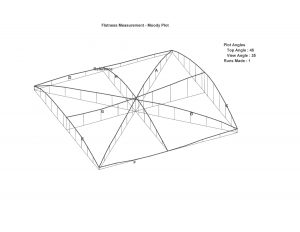
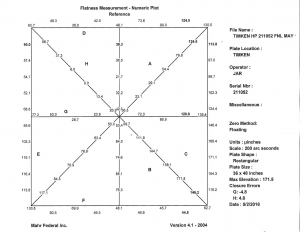
Routine surface plate calibration is necessary to ensure flatness and repeatability over time. The precision measurement group at Cross is ISO 17025 accredited for calibration of surface plate flatness and repeatability. We utilize the Mahr Surface Plate Certification System featuring:
- Moody and Profile Analysis,
- Isometric or Numeric plots,
- Multiple Run Average, and
- Automatic Grading According to Industry Standards.
The Mahr Computer Assisted Model determines any angular or linear deviation from absolute level, and is ideally suited for highly precise profiling of surface plates.
Intervals between calibrations will vary depending on the frequency of use, the environmental conditions where the plate is located, and the specific quality requirements of your company. Properly maintaining your surface plate may allow for longer intervals between each calibration, helps you avoid the added cost of relapping, and most importantly ensures the measurements you obtain on the plate are as accurate as possible. Although surface plates appear robust, they are precision instruments and should be treated as such. Here are some things to consider regarding care of your surface plates:
- Keep the plate clean, and if possible cover it when it is not in use
- Nothing should be placed on the plate other than gages or pieces to be measured.
- Don’t use the same spot on the plate every time.
- If possible, rotate the plate periodically.
- Respect the load limit of your plate
Precision Granite Base Can Improve Machine Tool Performances
Requirements are constantly increasing in mechanical engineering in general and in machine tool construction in particular. Achieving maximum precision and performance values without increasing costs are constant challenges to being competitive. The machine tool bed is a decisive factor here. Therefore, more and more machine tool manufacturers are relying on granite. Due to its physical parameters, it offers clear advantages that cannot be achieved with steel or polymer concrete.
Granite is a so-called volcanic deep rock and has a very dense and homogeneous structure with an extremely low coefficient of expansion, low thermal conductivity and high vibration damping.
Below you will discover why the common opinion that granite is mainly only suitable as machine base for high-end coordinate measuring machines is long outdated and why this natural material as a machine tool base is a very advantageous alternative to steel or cast iron even for high-precision machine tools.
We can manufacture granite components for dynamic motion, granite components for linear motors, granite components for ndt, granite components for xray, granite components for cmm, granite components for cnc, granite precision for laser, granite components for aerospace, granite components for precision stages...
High Added Value Without Additional Costs
The increasing use of granite in mechanical engineering is not so much due to the massive increase in the price of steel. Rather, it is because the added value for the machine tool achieved with a machine bed made of granite is possible at very little or no extra cost. This is proven by cost comparisons of well-known machine tool manufacturers in Germany and Europe.
The considerable gain in thermodynamic stability, vibration damping and long-term precision made possible by granite cannot be achieved with a cast iron or steel bed, or only at relatively high cost. For example, thermal errors can account for up to 75% of the total error of a machine, with compensation often attempted for by software – with moderate success. Due to its low thermal conductivity, granite is the better foundation for long-term precision.
With a tolerance of 1 μm, granite easily meets the flatness requirements according to DIN 876 for the degree of accuracy 00. With a value of 6 on the hardness scale 1 to 10, it is extremely hard, and with its specific weight of 2.8g/cm³ it almost reaches the value of aluminium. This also results in additional advantages such as higher feed rates, higher axis accelerations and an extension of the tool life for cutting machine tools. Thus, the change from a cast bed to a granite machine bed moves the machine tool in question into the high-end class in terms of precision and performance – at no extra cost.
Granite’s Improved Ecological Footprint
In contrast to materials such as steel or cast iron, natural stone does not have to be produced with a great deal of energy and using additives. Only relatively small amounts of energy are required for quarrying and surface treatment. This results in a superior ecological footprint, which even at the end of a machine’s life surpasses that of steel as a material. The granite bed can be the basis for a new machine or be used for completely different purposes such as shredding for road construction.
Nor are there any shortages of resources for granite. It is a deep rock formed from magma within the earth’s crust. It has ‘matured’ for millions of years and is available in very large quantities as a natural resource on almost all continents, including all of Europe.
Conclusion: The numerous demonstrable advantages of granite compared to steel or cast iron justify the increasing willingness of mechanical engineers to use this natural material as a foundation for high-precision, high-performance machine tools. Detailed information about granite properties, which are advantageous for machine tools and mechanical engineering, can be found in this further article.
A repeat measurement is a measurement of local flatness areas. The Repeat Measurement specification states that a measurement taken anywhere on the surface of a plate will repeat within the stated tolerance. Controlling local area flatness tighter than overall flatness guarantees a gradual change in surface flatness profile thereby minimizing local errors.
Most manufacturers, including imported brands, adhere to the Federal Specification of overall flatness tolerances but many overlook the repeat measurements. Many of the low value or budget plates available in the market today will not guarantee repeat measurements. A manufacturer who does not guarantee repeat measurements is NOT producing plates that meet the requirements of ASME B89.3.7-2013 or Federal Specification GGG-P-463c, or DIN 876, GB, JJS...
Both are critical to ensure a precision surface for accurate measurements. Flatness specification alone is not sufficient to guarantee measurement accuracy. Take as an example, a 36 X 48 Inspection Grade A surface plate, which meets ONLY the flatness specification of .000300". If the piece being checked bridges several peaks, and the gage being used is in a low spot, the measurement error could be the full tolerance in one area, 000300"! Actually, it can be much higher if the gage is resting on the slope of an incline.
Errors of .000600"-.000800" are possible, depending upon the severity of the slope, and the arm length of the gage being used. If this plate had a Repeat Measurement specification of .000050"F.I.R. then the measurement error would be less than .000050" regardless of where the measurement is taken on the plate. Another problem, which usually arises when an untrained technician attempts to resurface a plate on-site, is the use of Repeat Measurements alone to certify a plate.
The instruments that are used to verify repeatability are NOT designed to check overall flatness. When set to zero on a perfectly curved surface, they will continue to read zero, whether that surface is perfectly flat or perfectly concave or convex 1/2"! They simply verify the uniformity of the surface, not the flatness. Only a plate that meets both the flatness specification AND the repeat measurement specification truly meets the requirements of ASME B89.3.7-2013 or Federal Specification GGG-P-463c.
Ask us about or flatness specification and repeat measurement promise by calling +86 19969991659 or emailing INFO@ZHHIMG.COM
Yes, but they can only be guaranteed for a specific vertical temperature gradient. The effects of thermal expansion on the plate could easily cause a change in accuracy greater than the tolerance if there is a change in the gradient. In some cases, if the tolerance is tight enough, the heat absorbed from overhead lighting can cause enough of a gradient change over several hours.
Granite has a coefficient of thermal expansion of approximately .0000035 inches per inch per 1°F. As an example: A 36" x 48" x 8" surface plate has an accuracy of .000075" (1/2 of Grade AA) at a gradient of 0°F, the top and bottom are the same temperature. If the top of the plate warms up to the point where it is 1°F warmer than the bottom, the accuracy would change to .000275" convex ! Therefore, ordering a plate with a tolerance tighter than Laboratory Grade AA should only be considered if there is adequate climate control.
A surface plate should be supported at 3 points, ideally located 20% of the length in from the ends of the plate. Two supports should be located 20% of the width in from the long sides, and the remaining support should be centered. Only 3 points can rest solidly on anything but a precision surface.
The plate should be supported at these points during production, and it should be supported only at these three points while in use. Attempting to support the plate at more than three points will cause the plate to receive its support from various combinations of three points, which will not be the same 3 points on which it was supported during production. This will introduce errors as the plate deflects to conform to the new support arrangement. All zhhimg steel stands have support beams designed to line up with the proper support points.
If the plate is properly supported, precise leveling is only necessary if your application calls for it. Leveling is not necessary to maintain the accuracy of a properly supported plate.
Why Choose Granite for Machine Bases and Metrology Components?
The answer is 'yes' for almost every application. The advantages of granite include: No rust or corrosion, almost immune to warping, no compensating hump when nicked, longer wear life, smoother action, greater precision, virtually non-magnetic, low co-efficient of thermal expansion, and low maintenance cost.
Granite is a type of igneous rock quarried for its extreme strength, density, durability, and resistance to corrosion. But granite is also very versatile– it’s not just for squares and rectangles! In fact, Starrett Tru-Stone confidently works with granite components engineered in shapes, angles, and curves of all variations on a regular basis—with excellent outcomes.
Through our state of the art processing, cut surfaces can be exceptionally flat. These qualities make granite the ideal material to create custom-size and custom-design machine bases and metrology components. Granite is:
machineable
precisely flat when cut and finished
rust resistant
durable
long lasting
Granite components are also easy to clean. When creating custom designs, be sure to choose granite for its superior benefits.
STANDARDS / HIGH WEAR APPLICATIONS
The granite utilized by ZhongHui for our standard surface plate products has high quartz content, which provides greater resistance to wear and damage. Our Superior Black and Crystal Pink colors have low water absorption rates, minimizing the possibility of your precision gages rusting while setting on the plates. The colors of granite offered by ZhongHui result in less glare, which means less eyestrain for individuals using the plates. We have chosen our granite types while considering thermal expansion in an effort to keep this aspect minimal.
CUSTOM APPLICATIONS
When your application calls for a plate with custom shapes, threaded inserts, slots or other machining, you’ll want to select a material like Black Diabase. This natural material offers superior stiffness, excellent vibration dampening, and improved machinability.
Yes, if they are not too badly worn. Our factory setting and equipment allow the optimum conditions for proper plate calibration and rework if necessary. Generally, if a plate is within .001" of the required tolerance, it can be resurfaced on-site. If a plate is worn to the point where it is more than .001" out of tolerance, or if it is badly pitted or nicked, then it will need to be sent to the factory for grinding prior to relapping.
Great care should be exercised in selecting an on-site calibration and resurfacing technician. We urge you to use caution in selecting your calibration service. Ask for accreditation and verify the equipment that the technician will use has a National Inspection Institution traceable calibration. It takes many years to learn how to properly lap precision granite.
ZhongHui provides quick turn-around on calibrations performed in our factory. Send your plates in for calibration if possible. Your quality and reputation depend on the accuracy of your measurement instruments including surface plates!
Our black surface plates have a significantly higher density and are up to three times as stiff. Therefore, a plate made of the black does not need to be as thick as a granite plate of the same size to have equal or greater resistance to deflection. Reduced thickness means less weight and lower shipping costs.
Beware of others who use lower quality black granite in the same thickness. As stated above, properties of granite, like wood or metal, vary by material and color, and is not an accurate predictor of stiffness, hardness, or wear resistance. In fact, many types of black granite and diabase are very soft and not suitable for surface plate applications.
No. The specialized equipment and training necessary to rework these items requires that they be returned to the factory for calibration and rework.
Yes. Ceramic and granite have similar characteristics, and the methods used to calibrate and lap granite can be used with ceramic items as well. Ceramics are more difficult to lap than granite resulting in a higher cost.
Yes, provided that the inserts are recessed below the surface. If steel inserts are flush with, or above the surface plane, they must be spot-faced down before the plate can be lapped. If required, we can provide that service.
Yes. Steel inserts with the desired thread (English or metric) can be epoxy bonded into the plate at the desired locations. ZhongHui uses CNC machines to provide the tightest insert locations within +/- 0.005”. For less critical inserts, our locational tolerance for threaded inserts is ±.060". Other options include steel T-Bars and dovetail slots machined directly into the granite.
Inserts that are properly bonded using high strength epoxy and good workmanship will withstand a great deal of torsional and shear force. In a recent test, using 3/8"-16 threaded inserts, an independent testing laboratory measured the force required to pull an epoxy-bonded insert from a surface plate. Ten plates were tested. Out of these ten, in nine cases, the granite fractured first. The average load at the point of failure was 10,020 lbs. for gray granite and 12,310 lbs. for black. In the single case where an insert pulled free of the plate, the load at the point of failure was 12,990 lbs.! If a work piece forms a bridge across the insert and extreme torque is applied, it is possible to generate enough force to fracture the granite. Partially for this reason, ZhongHui gives guidelines for the maximum safe torque that can be applied the epoxy bonded inserts: https://www.zhhimg.com/standard-thread-inserts-product/
Yes, but only at our factory. At our plant, we can restore almost any plate to 'like-new' condition, usually for less than half the cost of replacing it. Damaged edges can be cosmetically patched, deep grooves, nicks, and pits can be ground out, and the attached supports can be replaced. In addition, we can modify your plate to increase its versatility by adding solid or threaded steel inserts and cutting slots or clamping lips, per your specifications.
Why Choose Granite?
Granite is a type of igneous rock formed in the Earth millions of years ago. The composition of igneous rock contained many minerals such as quartz that is extremely hard and wear-resistant. In addition to hardness and wear resistance granite has approximately half the coefficient of expansion as cast iron. As its volumetric weight is approximately one third that of cast iron, granite is easier to manoeuvre.
For machine bases and metrology components, black granite is the colour most used. Black granite has a higher percentage of quartz than other colours and is, therefore, the hardest wearing.
Granite is cost-effective, and cut surfaces can be exceptionally flat. Not only can it be hand lapped to achieve extremes of accuracy, but re-conditioning can be performed without moving the plate or table off-site. It is entirely a hand lapping operation and generally costs much less than re-conditioning a cast iron alternative.
These qualities make granite the ideal material to create custom-size and custom-design machine bases and metrology components such as the granite surface plate.
ZhongHui produces bespoke granite products that are created to support specific measurement requirements. These bespoke items vary from straight edges to tri squares. Due to the versatile nature of granite, the components can be produced to any size required; they are hard wearing and long-lasting.
Advantages of Granite Surface Plates
The importance of measuring on an even surface was established by British inventor Henry Maudsley in the 1800s. As a machine tool innovator, he determined that consistent production of parts required a solid surface for reliable measurements.
The industrial revolution created a demand for measuring surfaces, so engineering company Crown Windley created manufacturing standards. The standards for surface plates were first set by Crown in 1904 using metal. As the demand and cost for metal increased, alternative materials for the measuring surface were investigated.
In America, monument creator Wallace Herman established that black granite was an excellent surface plate material alternative to metal. As granite is non-magnetic and doesn’t rust, it soon became the preferred measuring surface.
A granite surface plate is an essential investment for laboratories and test facilities. A granite surface plate of 600 x 600 mm can be mounted on a support stand. The stands provide a working height of 34” (0.86m) with five adjustable points for levelling.
For reliable and consistent measurement results, a granite surface plate is crucial. As the surface is a smooth and stable plane, it enables instruments to be carefully manipulated.
The main advantages of granite surface plates are:
• Non-reflective
• Resistant to chemicals and corrosion
• Low coefficient of expansion compared with cart iron so less affected by temperature change
• Naturally rigid and hard-wearing
• The plane of the surface is unaffected if scratched
• Will not rust
• Non-magnetic
• Easy to clean and maintain
• Calibration and resurfacing can be done onsite
• Suitable for drilling for threaded support inserts
• High vibration damping
For many shops, inspection rooms and laboratories, precision granite surface plates are relied on as the basis for accurate measurement. Because every linear measurement depends on an accurate reference surface from which final dimensions are taken, surface plates provide the best reference plane for work inspection and layout prior to machining. They also are ideal bases for making height measurements and gaging surfaces. Further, a high degree of flatness, stability, overall quality and workmanship make them a good choice for mounting sophisticated mechanical, electronic and optical gaging systems. For any of these measurement processes, it is imperative to keep surface plates calibrated.
Repeat Measurements and Flatness
Both flatness and repeat measurements are critical to ensure a precision surface. Flatness can be considered as all points on the surface being contained within two parallel planes, the base plane and the roof plane. The measurement of distance between the planes is the overall flatness of the surface. This flatness measurement commonly carries a tolerance and may include a grade designation.
The flatness tolerances for three standard grades are defined in the federal specification as determined by the following formula:
Laboratory Grade AA = (40 + diagonal² / 25) x 0.000001 inch (unilateral)
Inspection Grade A = Laboratory Grade AA x 2
Tool Room Grade B = Laboratory Grade AA x 4
In addition to flatness, repeatability must be ensured. A repeat measurement is a measurement of local flatness areas. It is a measurement taken anywhere on the surface of a plate that will repeat within the stated tolerance. Controlling local area flatness to a tighter tolerance than overall flatness guarantees a gradual change in surface flatness profile, thereby minimizing local errors.
To ensure a surface plate meets both the flatness and repeat measurement specifications, manufacturers of granite surface plates should use Federal Specification GGG-P-463c as a basis for their specifications. This standard addresses repeat measurement accuracy, material properties of surface plate granites, surface finish, support point location, stiffness, acceptable methods of inspection and installation of threaded inserts.
Before a surface plate has worn beyond specification for overall flatness, it will show worn or wavy posts. Monthly inspection for repeat measurement errors using a repeat reading gage will identify wear spots. A repeat reading gage is a high-precision instrument that detects local error and can be displayed on a high magnification electronic amplifier.
Checking Plate Accuracy
By following a few simple guidelines, an investment in a granite surface plate should last for many years. Depending on plate usage, shop environment and required accuracy, frequency of checking the surface plate accuracy varies. A general rule of thumb is for a new plate to receive a full recalibration within one year of purchase. If the plate is used frequently, it is advisable to shorten this interval to six months.
Before a surface plate has worn beyond specification for overall flatness, it will show worn or wavy posts. Monthly inspection for repeat measurement errors using a repeat reading gage will identify wear spots. A repeat reading gage is a high-precision instrument that detects local error and can be displayed on a high magnification electronic amplifier.
An effective inspection program should include regular checks with an autocollimator, providing actual calibration of overall flatness traceable to National Institute of Standards and Technology (NIST). Comprehensive calibration by the manufacturer or an independent company is necessary from time to time.
Variations Between Calibrations
In some cases, there are variations between surface plate calibrations. Sometimes factors such as surface change resulting from wear, incorrect use of inspection equipment or use of noncalibrated equipment can account for these variations. The two most common factors, however, are temperature and support.
One of the most important variables is temperature. For instance, the surface might have been washed with a hot or cold solution prior to calibration and not allowed sufficient time to normalize. Other causes of temperature change include drafts of cold or hot air, direct sunlight, overhead lighting or other sources of radiant heat on the surface of the plate.
There also can be variations in the vertical temperature gradient between winter and summer. In some cases, the plate is not allowed sufficient time to normalize after shipment. It is a good idea to record the vertical gradient temperature at the time the calibration is performed.
Another common cause for calibration variation is a plate that is improperly supported. A surface plate should be supported at three points, ideally located 20% of the length in from the ends of the plate. Two supports should be located 20% of the width in from the long sides, and the remaining support should be centered.
Only three points can rest solidly on anything but a precision surface. Attempting to support the plate at more than three points will cause the plate to receive its support from various combinations of three points, which will not be the same three points on which it was supported during production. This will introduce errors as the plate deflects to conform to the new support arrangement. Consider using steel stands with support beams designed to line up with the proper support points. Stands for this purpose are generally available from the surface plate manufacturer.
If the plate is properly supported, precise leveling is only necessary if an application specifies it. Leveling is not necessary to maintain the accuracy of a properly supported plate.
It is important to keep the plate clean. Airborne abrasive dust is usually the greatest source of wear and tear on a plate, as it tends to embed in workpieces and the contact surfaces of gages. Cover plates to protect them from dust and damage. Wear life can be extended by covering the plate when not in use.
Extend Plate Life
Following a few guidelines will reduce wear on a granite surface plate and ultimately, extend its life.
First, it is important to keep the plate clean. Airborne abrasive dust is usually the greatest source of wear and tear on a plate, as it tends to embed in workpieces and the contact surfaces of gages.
It also is important to cover plates to protect it from dust and damage. Wear life can be extended by covering the plate when not in use.
Rotate the plate periodically so that a single area does not receive excessive use. Also, it is recommended to replace steel contact pads on gaging with carbide pads.
Avoid setting food or soft drinks on the plate. Many soft drinks contain either carbonic or phosphoric acid, which can dissolve the softer minerals and leave small pits in the surface.
Where to Relap
When a granite surface plate needs re-surfacing, consider whether to have this service performed on-site or at the calibration facility. It is always preferable to have the plate relapped at the factory or a dedicated facility. If, however, the plate is not too badly worn, generally within 0.001 inch of the required tolerance, it can be resurfaced on-site. If a plate is worn to the point where it is more than 0.001 inch out of tolerance, or if it is badly pitted or nicked, then it should be sent to the factory for grinding prior to relapping.
A calibration facility has the equipment and factory setting providing the optimum conditions for proper plate calibration and rework if necessary.
Great care should be exercised in selecting an on-site calibration and resurfacing technician. Ask for accreditation and verify the equipment that the technician will use has a NIST-traceable calibration. Experience also is an important factor, as it takes many years to learn how to correctly lap precision granite.
Critical measurements start with a precision granite surface plate as a baseline. By ensuring a reliable reference by using a properly calibrated surface plate, manufacturers have one of the essential tools for reliable measurements and better quality parts.
Checklist for Calibration Variations
- The surface was washed with a hot or cold solution prior to calibration and was not allowed sufficient time to normalize.
- The plate is improperly supported.
- Temperature change.
- Drafts.
- Direct sunlight or other radiant heat on the surface of the plate. Be sure that overhead lighting is not heating the surface.
- Variations in the vertical temperature gradient between winter and summer. If at all possible, know the vertical gradient temperature at the time the calibration is performed.
- Plate not allowed sufficient time to normalize after shipment.
- Improper use of inspection equipment or use of noncalibrated equipment.
- Surface change resulting from wear.
Tech Tips
Because every linear measurement depends on an accurate reference surface from which final dimensions are taken, surface plates provide the best reference plane for work inspection and layout prior to machining.
Controlling local area flatness to a tighter tolerance than overall flatness guarantees a gradual change in surface flatness profile, thereby minimizing local errors.